

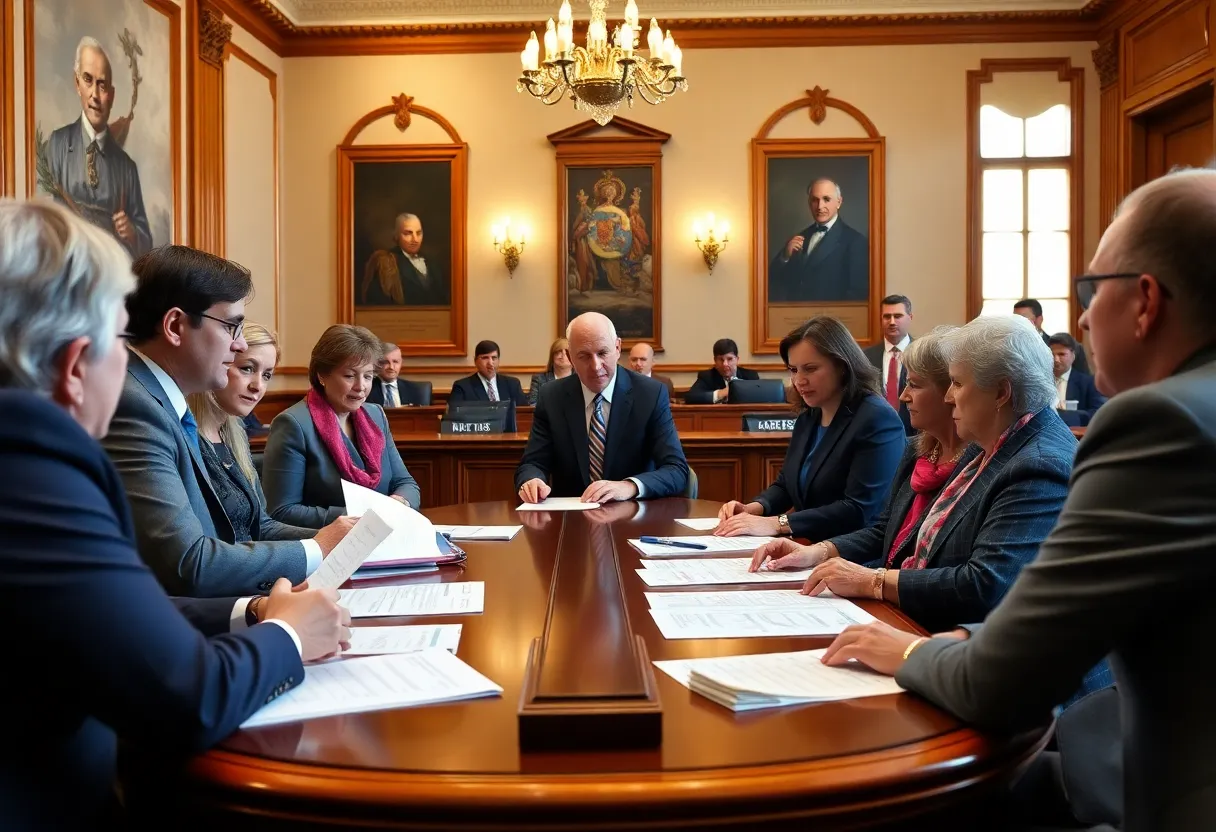
Annapolis, Md, December 17, 2025
Maryland lawmakers have created a commission to study potential reparations for slavery, overriding Governor Wes Moore’s veto. This bipartisan effort aims to address historical injustices and enhance economic equity within affected communities. The commission will be tasked with proposing various forms of reparations and is expected to submit a preliminary report by 2027. This move positions Maryland at the forefront of the national conversation on reparations, reflecting a commitment to reconciling its past and fostering community resilience.
Maryland Launches Commission for Slavery Reparations Study
Legislators Act to Create a Path for Addressing Historical Injustices
ANNAPOLIS, Md. — Maryland lawmakers have taken a significant step toward addressing the legacy of slavery, overriding Governor Wes Moore’s veto to establish a commission dedicated to studying potential reparations. This decision comes amidst an ongoing national conversation centered on race relations and historical injustices, demonstrating Maryland’s commitment to confronting its past and exploring pathways for healing.
The Maryland Reparations Commission’s creation follows bipartisan support, with an overwhelming majority in the General Assembly permitting an examination of the state’s historical injustices. This development reflects a growing recognition of the need for supports that could enhance economic equity among affected communities. By embracing a proactive approach, Maryland exemplifies how local leaders can navigate complex issues while fostering dialogue and fostering community resilience.
Legislative Override and Commission Formation
On December 16, 2025, the Maryland General Assembly officially voted to override Governor Moore’s veto of Senate Bill 587. This bill establishes the Maryland Reparations Commission, which will investigate the legacy of slavery and propose appropriate reparations for individuals impacted by this history. The commission is mandated to present a preliminary report by January 1, 2027, and a final report by November 1, 2027.
Governor’s Veto and Legislative Response
Governor Moore, who serves as the nation’s only Black governor, vetoed the bill citing a desire for actionable measures rather than further studies. He contended that the time had come to shift focus from discussions to action that addresses existing racial disparities. In contrast, proponents of the commission argued that a thorough study would lend credibility to reparations efforts and help ensure they align with constitutional standards.
Composition and Mandate of the Commission
The Maryland Reparations Commission is set to include members from both legislative chambers, representatives from the Legislative Black Caucus, as well as the state’s Comptroller or a designated representative. This diverse composition will ensure that various perspectives are considered as the commission examines potential reparations and their implications for Maryland’s communities.
Potential Reparations Under Consideration
The bill outlines a range of reparations options that the commission may evaluate, aimed at remedying the effects of slavery and systemic racism. These options include:
- Official statements of apology
- Monetary compensation
- Property tax rebates
- Social service assistance
- Licensing and permit fee waivers and reimbursements
- Assistance with down payments on homes
- Business incentives
- Childcare support
- Debt forgiveness
- Tuition waivers for higher education
Such measures aim to promote economic equity and address the ongoing impact of America’s historical injustices.
Context and Background
With approximately 30% of Maryland’s population identifying as Black, the establishment of the Reparations Commission aligns with broader national conversations regarding reparations. In the wake of heightened awareness following the murder of George Floyd in 2020, the topic of reparations has gained traction in various jurisdictions, including California and Illinois. This commission positions Maryland as a frontrunner in contemporary discussions about economic justice and social equity.
Despite dissenting on the formation of the commission, Governor Moore has expressed an eagerness to collaborate on addressing the pressing need for reparative actions. This highlights an opportunity for communities to come together, bridging gaps in understanding while working to create a more equitable future.
Conclusion
The General Assembly’s override of Governor Moore’s veto marks a pivotal moment in Maryland’s journey toward reconciling its history and addressing the enduring impacts of slavery. The newly formed commission will be essential in guiding the state toward meaningful reparations, fostering dialogue and community engagement as Maryland charts a course for healing and economic opportunity.
Frequently Asked Questions (FAQ)
What is the Maryland Reparations Commission?
The Maryland Reparations Commission is a body established to study and make recommendations regarding reparations for individuals whose ancestors were enslaved in the state or were impacted by certain inequitable government policies. The commission is required to submit a preliminary report by January 1, 2027, and a final report by November 1, 2027.
Why did Governor Wes Moore veto the bill to create the commission?
Governor Moore vetoed the bill in May 2025, expressing that while addressing the legacy of slavery is crucial, the time had come to “focus on the work itself” rather than further studies. He emphasized the need for actionable measures to address racial disparities.
What forms of reparations are being considered by the commission?
The bill outlines several forms of reparations that the commission may consider, including official statements of apology, monetary compensation, property tax rebates, social service assistance, licensing and permit fee waivers and reimbursements, assistance with down payments on homes, business incentives, childcare support, debt forgiveness, and tuition waivers for higher education.
How does Maryland’s Black population compare nationally?
Maryland has the highest Black population percentage outside the Deep South, with approximately 30% of its residents identifying as Black.
What is the broader context of reparations discussions in the United States?
The establishment of the Reparations Commission aligns with a broader national conversation on reparations, following increased attention to the issue after the 2020 murder of George Floyd. Other jurisdictions, including California, New York City, and Evanston, Illinois, have also explored or implemented reparations initiatives.
Key Features of the Maryland Reparations Commission
| Feature | Description |
|---|---|
| Establishment | Formed to study and recommend reparations for individuals affected by slavery and systemic racism in Maryland. |
| Composition | Includes members from the Senate and House of Delegates, representatives from the Legislative Black Caucus, and the Comptroller or their designee. |
| Mandate | Required to submit a preliminary report by January 1, 2027, and a final report by November 1, 2027. |
| Potential Reparations | Considers measures such as official apologies, monetary compensation, property tax rebates, social services, and more. |
| Governor’s Veto | Governor Moore vetoed the bill in May 2025, advocating for immediate action over further studies. |
Deeper Dive: News & Info About This Topic
HERE Resources

Author: STAFF HERE BALTIMORE WRITER
The BALTIMORE STAFF WRITER represents the experienced team at HEREBaltimore.com, your go-to source for actionable local news and information in Baltimore, Baltimore County, and beyond. Specializing in "news you can use," we cover essential topics like product reviews for personal and business needs, local business directories, politics, real estate trends, neighborhood insights, and state news affecting the area—with deep expertise drawn from years of dedicated reporting and strong community input, including local press releases and business updates. We deliver top reporting on high-value events such as the Baltimore Book Festival, Preakness Stakes, and Artscape. Our coverage extends to key organizations like the Baltimore Chamber of Commerce and Visit Baltimore, plus leading businesses in shipping and healthcare that power the local economy such as the Port of Baltimore and Johns Hopkins Medicine. As part of the broader HERE network, we provide comprehensive, credible insights into Maryland's dynamic landscape.