

Annapolis, MD, December 17, 2025
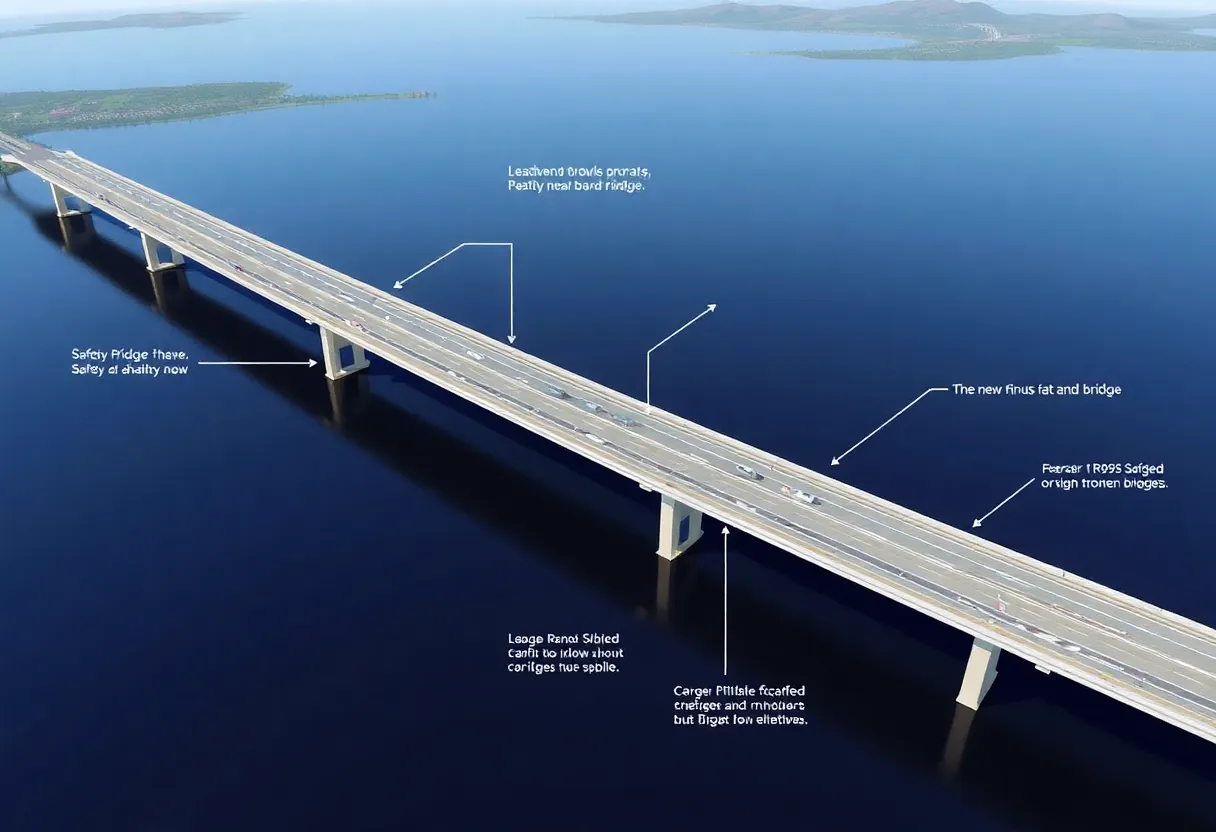
The Maryland Transportation Authority has proposed replacing the Chesapeake Bay Bridge with two new four-lane spans to reduce traffic congestion and enhance travel reliability. The initiative, known as ‘Alternative C’, aims to address current roadway deficiencies while ensuring environmental considerations. The proposal will be voted on by the MDTA Board in December 2025, marking a critical step in improving this vital transportation corridor.
Maryland Transportation Authority Proposes Chesapeake Bay Bridge Replacement to Alleviate Congestion
ANNAPOLIS, MD — The Maryland Transportation Authority (MDTA) has unveiled a proposal to replace the existing Chesapeake Bay Bridge with two new four-lane spans, aiming to significantly reduce traffic congestion and enhance travel reliability. This plan, known as “Alternative C,” is set for a vote by the MDTA Board on December 18, 2025.
Key Details of the Proposal
- Construction of Two New Four-Lane Spans: The proposal includes building two new four-lane bridge spans with full shoulders, designed to improve safety and accommodate current and future traffic demands.
- Removal of Existing Spans: Following the completion of the new spans, the existing bridge structures would be removed to address roadway deficiencies, including narrow lanes and lack of shoulders.
- Environmental Considerations: The plan aims to minimize environmental impact by aligning with new safety recommendations and providing higher navigational clearance to meet U.S. Coast Guard requirements.
- Cost Estimates: The projected cost for this project ranges between $14.8 billion and $17.6 billion, reflecting the scale and complexity of the undertaking.
Background and Rationale
The Chesapeake Bay Bridge serves as a critical transportation link between Maryland’s eastern and western shores, yet it has been facing increasing traffic congestion due to its aging infrastructure. Current conditions, such as narrow lanes and the absence of shoulders, lead to significant delays and safety concerns. The proposed replacement aims to tackle these issues by enhancing capacity and ensuring reliable travel times, thus supporting both commuter and emergency service needs.
In conjunction with the new spans, the project also outlines plans to widen U.S. 50 and U.S. 301 to four lanes in each direction from Oceanic Drive to Cox Creek. This expansion will further enhance the overall transportation network. Additionally, the MDTA is exploring the opportunity to include a bike and pedestrian path, pending evaluation during the planning process.
Engagement from the public is a fundamental part of this project. A public comment period is expected in late January 2026, followed by hearings in February 2026, providing residents and stakeholders an avenue to give feedback on the proposal and the draft Environmental Impact Statement. The final Environmental Impact Statement, along with the Record of Decision, is anticipated to be released in November 2026, marking an important step in the project’s progression.
Next Steps
The MDTA Board’s upcoming vote on December 18, 2025, will determine whether to proceed with Alternative C as the preferred plan for the Chesapeake Bay Bridge replacement. If approved, the project will advance through the outlined public engagement process, leading to finalization and eventual construction. This initiative reflects the ongoing efforts by Maryland transportation officials to bolster the safety, capacity, and reliability of a vital transportation corridor.
Frequently Asked Questions (FAQ)
What is the proposed Chesapeake Bay Bridge replacement plan?
The Maryland Transportation Authority (MDTA) has proposed replacing the existing Chesapeake Bay Bridge with two new four-lane spans, known as “Alternative C,” to alleviate traffic congestion and improve travel reliability. This plan is set for a vote by the MDTA Board on December 18, 2025.
What are the key components of the proposal?
The proposal includes constructing two new four-lane bridge spans with full shoulders, removing the existing spans, and widening U.S. 50 and U.S. 301 to four lanes in each direction from Oceanic Drive to Cox Creek. The project is estimated to cost between $14.8 billion and $17.6 billion.
How will the project address environmental concerns?
The plan aims to minimize environmental impact by aligning with new safety recommendations and providing higher navigational clearance to meet U.S. Coast Guard requirements, thereby reducing potential disruptions to the Chesapeake Bay ecosystem.
What is the timeline for public involvement?
A public comment period is scheduled for late January 2026, followed by public hearings in February 2026, allowing residents and stakeholders to provide feedback on the proposal and the draft Environmental Impact Statement. The final Environmental Impact Statement and Record of Decision are anticipated in November 2026.
What are the next steps after the MDTA Board’s vote?
If the MDTA Board approves Alternative C, the project will proceed with the public engagement process, leading to the finalization of plans and eventual construction, aiming to enhance the safety, capacity, and reliability of the Chesapeake Bay Bridge.
Key Features of the Chesapeake Bay Bridge Replacement Proposal
| Feature | Description |
|---|---|
| New Bridge Spans | Construction of two new four-lane bridge spans with full shoulders to improve safety and capacity. |
| Removal of Existing Spans | Demolition of current bridge structures to address deficiencies like narrow lanes and lack of shoulders. |
| Environmental Considerations | Design aligned with new safety recommendations and higher navigational clearance to meet U.S. Coast Guard requirements. |
| Cost Estimates | Projected project cost ranging from $14.8 billion to $17.6 billion. |
| Public Engagement | Public comment period in late January 2026, followed by hearings in February 2026, with final decisions expected in November 2026. |
Deeper Dive: News & Info About This Topic
HERE Resources
Salvadoran Restaurateur Expands Culinary Ventures in Baltimore

Author: STAFF HERE BALTIMORE WRITER
The BALTIMORE STAFF WRITER represents the experienced team at HEREBaltimore.com, your go-to source for actionable local news and information in Baltimore, Baltimore County, and beyond. Specializing in "news you can use," we cover essential topics like product reviews for personal and business needs, local business directories, politics, real estate trends, neighborhood insights, and state news affecting the area—with deep expertise drawn from years of dedicated reporting and strong community input, including local press releases and business updates. We deliver top reporting on high-value events such as the Baltimore Book Festival, Preakness Stakes, and Artscape. Our coverage extends to key organizations like the Baltimore Chamber of Commerce and Visit Baltimore, plus leading businesses in shipping and healthcare that power the local economy such as the Port of Baltimore and Johns Hopkins Medicine. As part of the broader HERE network, we provide comprehensive, credible insights into Maryland's dynamic landscape.