

Baltimore, January 13, 2026
The collapse of the Francis Scott Key Bridge in Baltimore has caused significant economic disruptions, resulting in the loss of six maintenance workers and halting operations at the Port of Baltimore for 11 weeks. The MV Dali, a container ship, struck a support pier, leading to the disaster. Local businesses are struggling in the aftermath, highlighting the urgent need for infrastructure investment and community resilience. Officials estimate reconstruction costs could range from $4.3 billion to $5.2 billion, with a projected opening for the new bridge by late 2030.
Francis Scott Key Bridge Collapse Hits Baltimore’s Economy
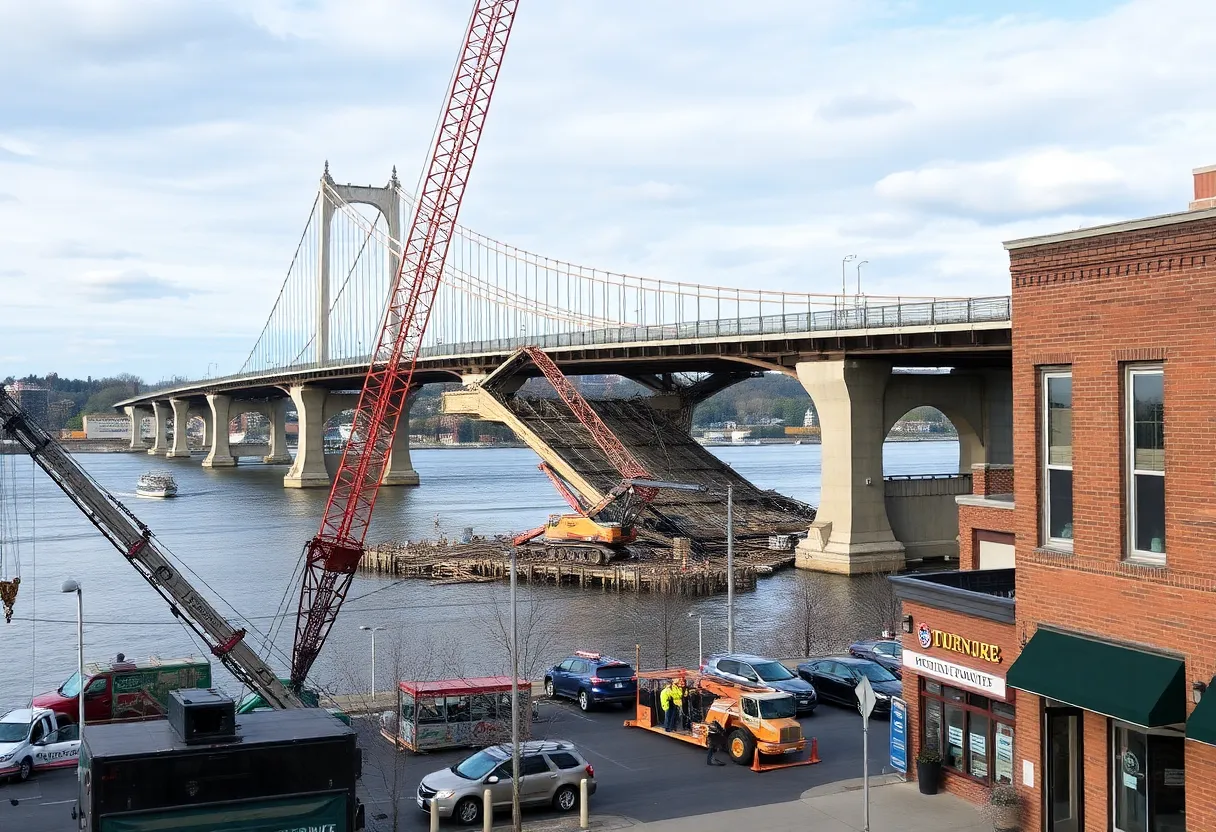
Baltimore, Maryland – On March 26, 2024, the Francis Scott Key Bridge collapsed after a container ship, the MV Dali, struck one of its support piers. This tragic incident resulted in the loss of six maintenance workers and significant disruptions to the Port of Baltimore and regional transportation.
The resilience of Baltimore’s business community and local entrepreneurs has been tested in the wake of this disaster. However, the determination shown by small businesses during times of crisis reflects the entrepreneurial spirit that has long characterized this city. While this catastrophe has underscored the need for robust infrastructure, it has also highlighted the importance of private investment and innovation in ensuring economic recovery and growth.
Details of the Incident
At approximately 1:28 a.m. EDT, the Singapore-registered MV Dali, loaded with nearly 4,700 containers and en route to Colombo, Sri Lanka, lost power shortly after leaving the Port of Baltimore. The ship’s crew issued a mayday call but tragically collided with the southwest supporting pier of the bridge, leading to a collapse of the main spans and three adjacent approach spans. Six members of an eight-person maintenance crew working on the bridge lost their lives, while two others were rescued from the Patapsco River. Fortunately, none of the ship’s crew or harbor pilots were injured. The National Transportation Safety Board (NTSB) attributed the ship’s power outages to an improperly labeled signal wire that had come loose and found fault with Hyundai’s subcontractor, WAGO Company.
Impact on the Port of Baltimore
The collapse of the Francis Scott Key Bridge, a vital artery in the Baltimore Beltway (Interstate 695), had immediate and profound effects on the Port of Baltimore, which stands as a crucial hub for trade. With the bridge spanning a critical shipping channel, vessel traffic was suspended for 11 weeks, resulting in disruptions to logistics and trade operations. In 2023, the Port of Baltimore served as a gateway for over 52 million tons of foreign cargo valued at nearly $81 billion, making it the 17th largest port in the United States. The closure led to an estimated economic loss of approximately $15 million per day, impacting countless local businesses reliant on this key infrastructure.
Reconstruction Efforts
In the aftermath of the collapse, Maryland officials announced plans to replace the Francis Scott Key Bridge. Initially, it was projected to open by late 2028 with an estimated budget between $1.7 billion and $1.9 billion. But as timelines and costs are frequently reassessed, the latest estimates from November 2025 revised the opening date to late 2030, with costs soaring to between $4.3 billion and $5.2 billion. Demolition of the original bridge began in July 2025 and is expected to continue over the next several months.
Legal Actions
The U.S. Department of Justice has intervened, filing a lawsuit seeking $100 million to cover cleanup costs resulting from the collapse. The lawsuit attributes liability to the ship’s owner and operator, Maersk, as well as its subcontractor, WAGO Company, echoing the NTSB’s findings that the incident was “entirely avoidable.”
Community Impact
The implications of this disaster extend well beyond transportation and trade logistics. The collapse has deeply affected the local community, especially in areas like Dundalk, Maryland, where the bridge represented not just a piece of infrastructure but a symbol of community connection and everyday life. The disruption has jeopardized employment and economic stability for many residents whose livelihoods are intertwined with the Port of Baltimore and the surrounding infrastructure.
Key Takeaways
In conclusion, the collapse of the Francis Scott Key Bridge has triggered a significant moment of reflection for Baltimore. As reconstruction plans unfold, the focus on infrastructure investment and support for local businesses becomes increasingly important. Baltimore’s ability to rebound will rely on the tenacity of its entrepreneurs and the community’s collective effort to adapt and grow in the face of adversity. Now more than ever, supporting local initiatives and remaining engaged in the economic discourse can help foster a stronger, more resilient Baltimore.
Frequently Asked Questions (FAQ)
What caused the collapse of the Francis Scott Key Bridge?
The collapse was caused by the MV Dali, a container ship that struck one of the bridge’s support piers after losing power. The National Transportation Safety Board determined that the ship’s power outages were due to an improperly labeled signal wire, which had come loose, and found Hyundai’s subcontractor, WAGO Company, at fault for the incident.
How long was the Port of Baltimore closed after the bridge collapse?
The Port of Baltimore’s shipping channel was closed for 11 weeks following the collapse of the Francis Scott Key Bridge.
When is the new bridge expected to open?
The new bridge is projected to open by late 2030, with an estimated cost of $4.3 billion to $5.2 billion.
What is the economic impact of the bridge collapse?
The collapse was estimated to cost the economy approximately $15 million per day due to the suspension of vessel traffic to and from the Port of Baltimore.
What legal actions have been taken in response to the collapse?
The U.S. Department of Justice filed a lawsuit seeking $100 million to cover cleanup costs, stating that the collapse was “entirely avoidable.” The lawsuit was filed against the ship’s owner and operator, Maersk, and its subcontractor, WAGO Company.
Key Features of the Francis Scott Key Bridge Collapse
| Feature | Details |
|---|---|
| Incident Date | March 26, 2024 |
| Location | Baltimore, Maryland |
| Cause | Collision with MV Dali due to ship’s power loss |
| Casualties | Six maintenance workers killed; two rescued |
| Port Closure Duration | 11 weeks |
| Economic Impact | Estimated $15 million per day loss |
| New Bridge Opening | Projected for late 2030 |
| Legal Action | U.S. Department of Justice filed $100 million lawsuit |
Deeper Dive: News & Info About This Topic
HERE Resources
Baltimore Weather Update and Economic Resilience
Maryland Commuters Face Major Traffic Disruptions
Wayfair Opening Mid-Atlantic Outlet in Hanover, Maryland
Reclaiming the Dream: Martin Luther King Jr. Celebration
Baltimore Braces for Cold Week with Possible Snow Ahead
Reviving Innovation: The Legacy of Henry Ford’s 999 Record
Baltimore City Campus Buildings Reopen After Heat Loss Closure
Maryland Governor Unveils Economic Strategy to Boost Growth
Army-Navy Game Boosts Baltimore’s Economy
Baltimore Reports $760 Million in Unrecoverable Unemployment Overpayments

Author: STAFF HERE BALTIMORE WRITER
The BALTIMORE STAFF WRITER represents the experienced team at HEREBaltimore.com, your go-to source for actionable local news and information in Baltimore, Baltimore County, and beyond. Specializing in "news you can use," we cover essential topics like product reviews for personal and business needs, local business directories, politics, real estate trends, neighborhood insights, and state news affecting the area—with deep expertise drawn from years of dedicated reporting and strong community input, including local press releases and business updates. We deliver top reporting on high-value events such as the Baltimore Book Festival, Preakness Stakes, and Artscape. Our coverage extends to key organizations like the Baltimore Chamber of Commerce and Visit Baltimore, plus leading businesses in shipping and healthcare that power the local economy such as the Port of Baltimore and Johns Hopkins Medicine. As part of the broader HERE network, we provide comprehensive, credible insights into Maryland's dynamic landscape.