

Baltimore, December 9, 2025
The iconic office tower at 300 E. Lombard Street in Baltimore has entered receivership following an 83% decline in its market value, dropping from $38.5 million to $9.1 million. This downturn reflects broader trends in the commercial real estate market, including high vacancy rates and financial struggles, impacting local businesses and overall economic health.
Baltimore, Maryland
Landmark Downtown Tower Seeks Receivership Amid 83% Drop in Value
A significant decline in market value highlights challenges in commercial real estate.
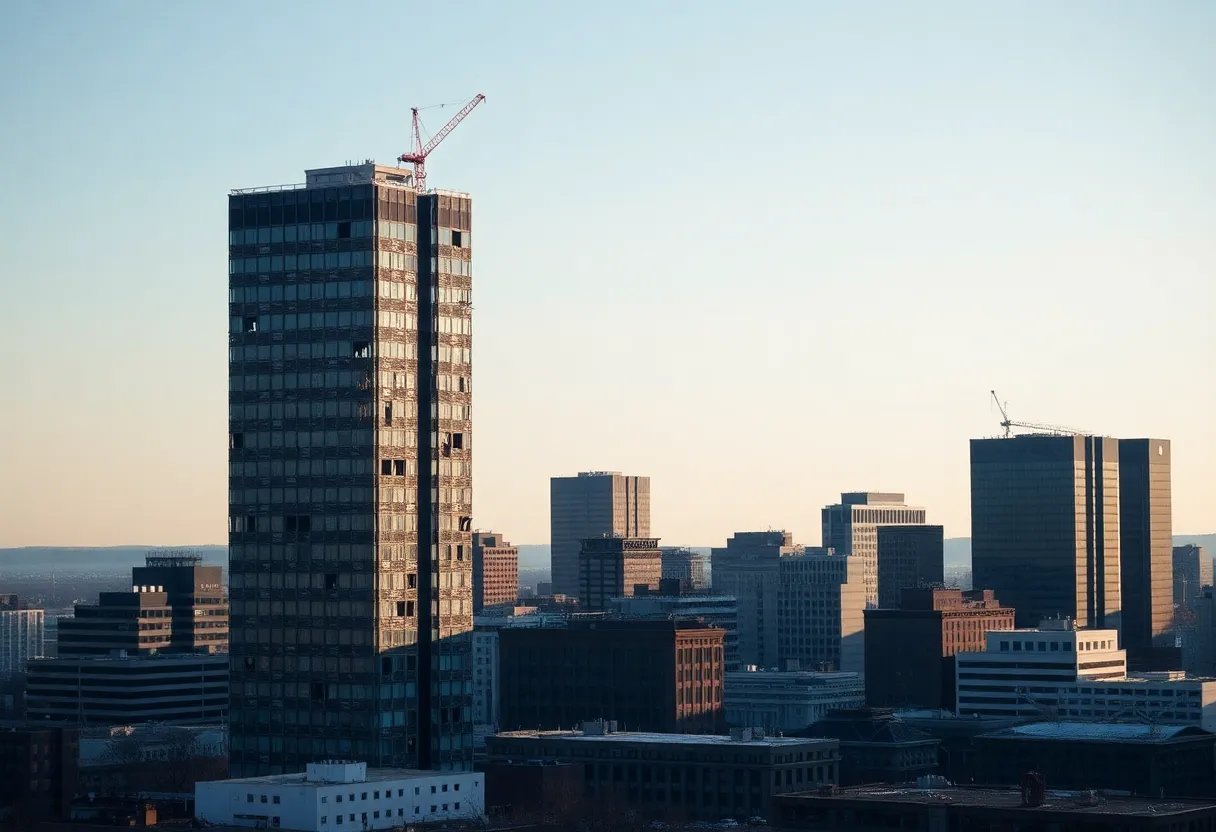
The office tower located at 300 E. Lombard Street has recently entered receivership following a staggering 83% decline in its market value. Once appraised at $38.5 million in 2014, the building’s current valuation stands at $9.1 million as of January 2024. This rapid devaluation can be attributed to rising vacancy rates and persistent financial challenges that plague the commercial sector in downtown Baltimore.
With a planned sale price of just $6.5 million, the fate of 300 E. Lombard Street serves as a poignant reminder of the struggles many properties face in a shifting market. The tower’s occupancy has dipped from an impressive 97% a decade ago to only 57% in June 2023, reflecting the wider challenges facing Baltimore’s commercial real estate market.
Declining Property Values and Rising Vacancies in Baltimore’s Commercial Real Estate
The situation at 300 E. Lombard Street mirrors broader trends evident across Baltimore’s commercial real estate sector. Other notable properties have similarly faced sharp drops in value. For example, the 30-story office tower at One South Street sold for $24 million in June 2023, less than half its $66 million sale price in 2018. The 28-story 100 E. Pratt Street building also experienced a similar downturn, with its assessed value falling by 45% in July 2023, from $171.4 million to $93.65 million.
Current challenges in the market highlight a 30% record high vacancy rate in downtown Baltimore, underscored by the relocation of significant employers like T. Rowe Price to newer developments in areas such as Harbor Point, Harbor East, and the Baltimore Peninsula. These shifts continue to erode both occupancy rates and property valuations.
Impact on Baltimore’s Commercial Real Estate Market
The widespread declines in office property values indicate substantial repercussions for Baltimore’s commercial real estate landscape. As vacancy rates climb and property values dwindle, the implications for tax revenues and overall financial health of property owners become increasingly concerning. Businesses now gravitate toward newer, amenity-rich spaces that offer better environments conducive to employee productivity and satisfaction, which further exacerbates the cycle of declining occupancy.
Background on 300 E. Lombard Street
The 19-story office tower at 300 E. Lombard Street has historically held a prominent place within Baltimore’s commercial identity. However, recent trends suggest a significant decline in both occupancy rates and financial stability, resulting in the decision to pursue receivership and a sale of the property. This case epitomizes the ongoing struggles within the city’s commercial real estate market, driven by significant decreases in property values and persistent rising vacancies.
Conclusion
In summary, the alarming drop in the value of 300 E. Lombard Street is emblematic of the broader challenges facing Baltimore’s commercial real estate landscape. With occupancy rates diminishing and major employers opting for more modern, amenity-rich locales, local small businesses and entrepreneurs may feel the ripple effects of this shift. Supporting innovative local endeavors and advocating for a streamlined regulatory environment may offer potential pathways to revitalize Baltimore’s economy and transform its commercial landscape. Stakeholders and residents alike are encouraged to engage with and support initiatives that bolster local businesses and stimulate economic growth in the area.
Frequently Asked Questions (FAQ)
What is the current value of 300 E. Lombard Street?
The building’s value has decreased by 83% over the past decade, from $38.5 million in 2014 to an appraised value of $9.1 million in January 2024. It is now set to sell for $6.5 million.
What factors have contributed to the decline in property values in Baltimore?
The decline is attributed to rising vacancies, financial struggles, and a shift in demand towards newer, amenity-rich developments. Major employers have relocated to newer developments in Harbor Point, Harbor East, and the Baltimore Peninsula, contributing to the decline in occupancy and property values.
How has the commercial real estate market in Baltimore been affected?
The market has experienced a record office vacancy rate of 30%, with declining property values and reduced tax revenue. The trend reflects a broader shift in demand, with businesses favoring newer developments over older office spaces.
What is the significance of 300 E. Lombard Street in Baltimore’s commercial real estate market?
Once a prominent fixture in the city’s commercial landscape, the building’s decision to enter receivership and sell reflects the ongoing challenges in Baltimore’s commercial real estate market, characterized by declining property values and rising vacancies.
Key Features of the Article
| Feature | Description |
|---|---|
| Property Value Decline | 300 E. Lombard Street’s value decreased by 83% over the past decade, from $38.5 million in 2014 to an appraised value of $9.1 million in January 2024. It is now set to sell for $6.5 million. |
| Market Trends | Declining property values and rising vacancies in Baltimore’s commercial real estate market, with a record office vacancy rate of 30%. Major employers have relocated, contributing to the decline. |
| Impact on Commercial Real Estate | Reduced tax revenue and financial challenges for property owners due to declining property values and high vacancy rates. A shift in demand toward newer, amenity-rich developments over older office spaces. |
| Background on 300 E. Lombard Street | A 19-story office tower in downtown Baltimore that has faced increasing vacancies and financial difficulties, leading to its entry into receivership and sale. |
Deeper Dive: News & Info About This Topic
HERE Resources
Cheesecake Factory Closes Iconic Baltimore Harborplace Location
Mayor Brandon M. Scott to Receive Baltimore Workforce Visionary Award
Bel Air Secures $3.9 Million Financing for Retail Development
Genevieve Hanson Expands H & H Realty Group with Construction Acquisition
How to Identify Your Home Buying Priorities: An Essential Guide for First-Time Buyers
Eagle Physical Therapy Acquires Former Rite Aid in Baltimore
Eagle Physical Therapy Expands with New Baltimore Location
Two Local Businesses to Close at Annapolis Town Center
Challenges in Chicago’s Construction and Real Estate Sector
New Jersey Construction Industry Set for Significant Growth

Author: STAFF HERE BALTIMORE WRITER
The BALTIMORE STAFF WRITER represents the experienced team at HEREBaltimore.com, your go-to source for actionable local news and information in Baltimore, Baltimore County, and beyond. Specializing in "news you can use," we cover essential topics like product reviews for personal and business needs, local business directories, politics, real estate trends, neighborhood insights, and state news affecting the area—with deep expertise drawn from years of dedicated reporting and strong community input, including local press releases and business updates. We deliver top reporting on high-value events such as the Baltimore Book Festival, Preakness Stakes, and Artscape. Our coverage extends to key organizations like the Baltimore Chamber of Commerce and Visit Baltimore, plus leading businesses in shipping and healthcare that power the local economy such as the Port of Baltimore and Johns Hopkins Medicine. As part of the broader HERE network, we provide comprehensive, credible insights into Maryland's dynamic landscape.